


Shopping for
internet & TV has
never been easier
Join the tens of millions of people who trust us to search, compare and order internet and TV service for their homes.
It's quick, easy and best of all, free.



30+ leading brands to shop
Shop plans from the top internet and TV providers like AT&T, Xfinity, Verizon and more.

One place to research and order
Use our patented technology to search providers, compare plans and order service all on our secure site.

20+ years of experience
Over 20 years and 100+ experts dedicated to helping you find what you need.
Allconnect’s your one-stop shop
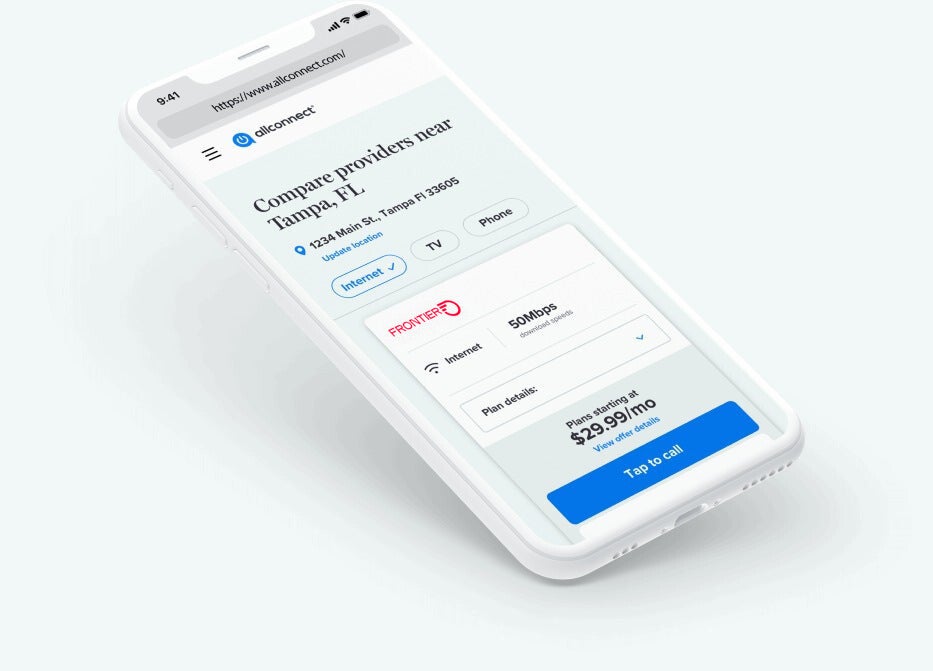
Search a trusted marketplace with decades of experience and millions of users.
With our 20+ years of research invested in showing accurate plans and pricing from the top internet, TV and streaming providers, you’ll get the plan you need.
About Allconnect





















Find the leading providers in your area within 20 seconds.
We’ve found the top internet, TV and streaming providers, their best offers and most popular plans just for you. When you’ve found what you need, place your order and pat yourself on the back.
About our providers



Shop on your own or get help. Either way, we're here.
Whether you want to jet through a quick online checkout, spend some time research yourself, or need a recommendation, our online tools and trained experts are only a call or click away.
Why choose Allconnect
You want a simple research process that saves you time and money. You want help if you need it, and a speedy checkout when you don’t. Here’s why it’s easier to shop with us.

Typical
experience
The Allconnect experience
Research process Search individual provider sites and blog sites.
Research process Do all your research on one site.
Time Visit individual provider sites, entering your location each time to check availability.
Time Enter your location once and compare all of your options at once.
Money Track offers across individual provider sites.
Money View all current offers to score the best deal.
Help Search online for answers or ask around.
Help Call a live expert to chat or browse expert recommendations online.
Give us a call.
We'll get you taken care of.
Whether you know what you want or need a little advice, we'll help you find your ideal plan and order your service over the phone.
Call now: (877) 508-7095Monday – Friday
8:00 a.m. to 10:00 p.m. EST
Saturday
9:00 a.m. to 7:00 p.m. EST
Sunday
10:00 a.m. to 7:00 p.m. EST
Ready to find your plan?
View available internet and TV plans at your address.
View available internet and TV plans at your address.


-
Featured
![Common reasons your Wi-Fi is not working]() Common reasons your Wi-Fi is not working Camryn Smith — 6 min read
Common reasons your Wi-Fi is not working Camryn Smith — 6 min read -
Featured
![What is a good internet speed?]() What is a good internet speed? Camryn Smith — 7 min read
What is a good internet speed? Camryn Smith — 7 min read -
Featured
![How much should I pay for internet?]() How much should I pay for internet? Joe Supan — 10 min read
How much should I pay for internet? Joe Supan — 10 min read



Latest
-
Thursday, April 18, 2024
Comcast introduces new pre-paid internet, mobile and streaming plansRobin Layton — 2 min read
-
Thursday, April 18, 2024
T-Mobile imposes data cap of 1.2TB/mo.Robin Layton — 2 min read
-
Thursday, April 18, 2024
What is a portable Wi-Fi hotspot?Robin Layton — 6 min read

Subscribe for more internet tips
By subscribing, you agree to receive Allconnect promotional emails. Your privacy is important to us.